In this guide
DMLT means Diploma in Medical Laboratory Technology. It is a diploma route into medical laboratory education. Start by checking the exact award, the institution’s current curriculum and the requirements of the jobs or higher-study courses you want next.
DMLT at a glance
| Question | Starting point |
|---|---|
| Full form | Diploma in Medical Laboratory Technology |
| Qualification | Diploma, rather than a bachelor’s degree |
| Current national curriculum | NCAHP competency-based DMLT framework |
| Duration and entry | The July 2026 announcement describes two years after Class XII Science with Physics, Chemistry and Biology |
| Admission and cost | Follow the current state/institution notice and complete written fee schedule |
| Next steps | Eligible laboratory jobs or further study under the receiving employer/university’s rules |
The Ministry’s July 2026 announcement advised implementation from 2026–27 and mandatory adoption from 2027–28. Check the institution’s adoption status and admission cycle. Older pages can describe legacy arrangements.
What the course prepares you to learn
Laboratory education combines science with supervised practical work. The goal is to understand the specimen, the procedure and the quality checks that make the result usable. Training should make clear who supervises each task and how work is documented.
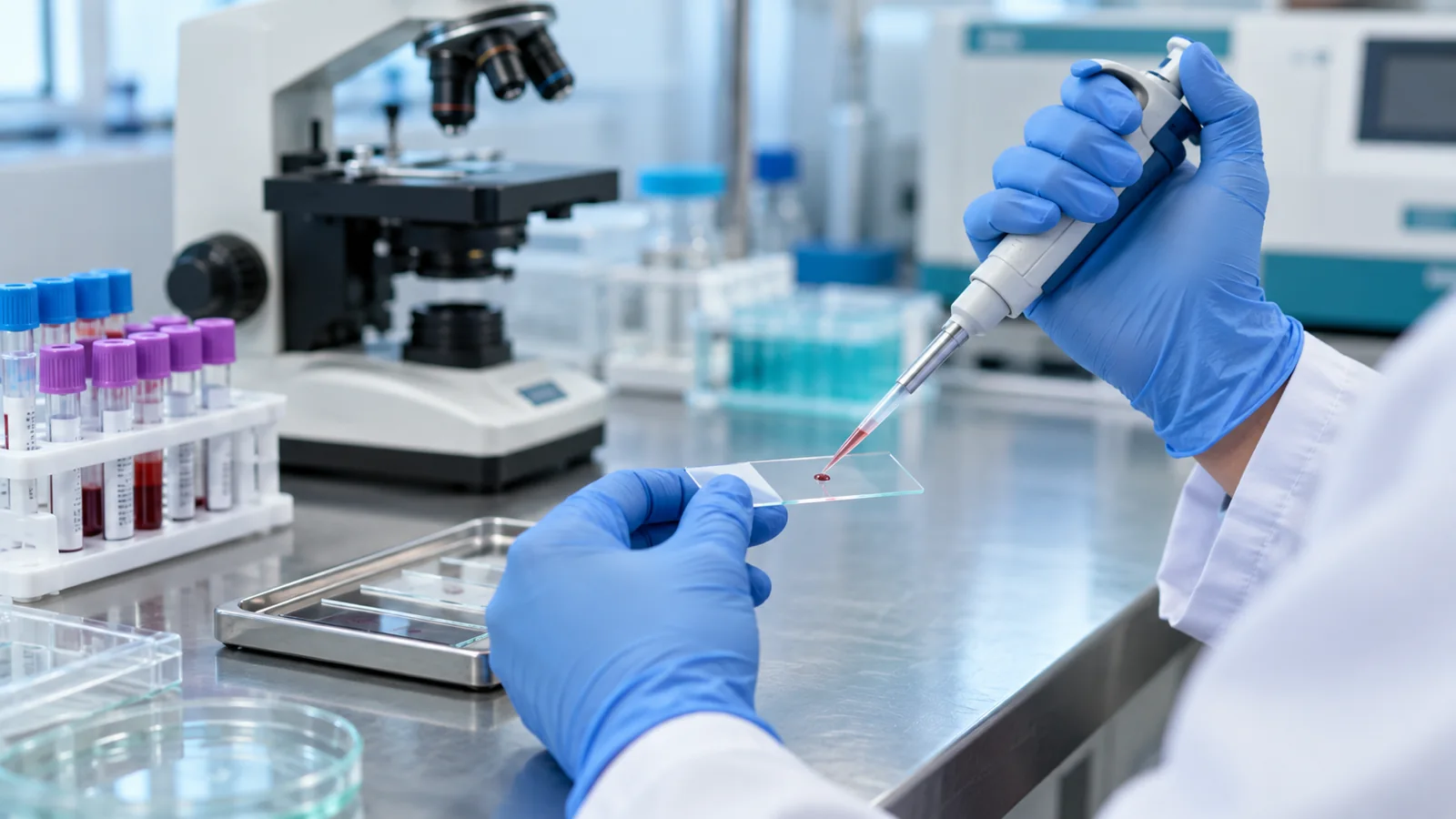
When you read a syllabus, look beyond the subject list. Ask where practical sessions take place, whether students work in a teaching or clinical laboratory, how competencies are assessed and what happens if practical attendance is incomplete. A photograph of a laboratory is not evidence of student access to it.
The Kerala 2026 prospectus, clause 3.3 describes its DMLT course as two years, semester-based, under the NCAHP curriculum. This is a current state example; it does not establish every college’s implementation.
Eligibility and admission questions
For an application, read the actual admission notice for the course and year. Record required subjects, minimum marks, category provisions, age conditions, nativity rules, selection process and document deadlines separately. Meeting an academic requirement does not automatically give you a seat.
Kerala’s 2026 prospectus, clause 1.3 describes selection using a rank list based on qualifying-examination marks. Other providers may publish a different process. Do not assume there is a single national DMLT admission form or a universal entrance-test rule.
Can you study DMLT after Class 10?
Use the Class XII route stated in the current national DMLT announcement as your starting point. A differently named qualification can have different rules: Safdarjung Hospital’s academic page lists a three-year Diploma in Medical Lab Technician with Class 10 entry. That example should not be renamed DMLT or used to promise admission to every DMLT program.
Is NEET required?
Check the current selection notice rather than a blanket online answer. The exam, counselling or merit process must match the exact program. If a college’s marketing page and official prospectus disagree, request written clarification before paying.
Subjects, practical work and assessment
Compare the curriculum’s foundation sciences, laboratory disciplines, safety, specimen handling, quality assurance and clinical exposure. Ask for the current syllabus and assessment scheme. A good comparison records actual contact hours, placement structure and competency requirements rather than assuming two diplomas with the same name offer the same training.
For each college, write down:
- the curriculum version and awarding/assessment body;
- the laboratory departments available to students;
- supervised practical and clinical training arrangements;
- attendance, assessment and completion conditions;
- any training period outside the advertised academic duration.
Fees and the full commitment
Compare tuition, mandatory additional fees, refundable deposits, examinations, accommodation, transport and living expenses. Distinguish yearly charges from one-off charges, and ask whether fees are payable during any training period.
Our DMLT fees guide explains an official Kerala special-fee example and what it excludes. Use the course-cost calculator with the college’s written figures to make a personal budget.
Career routes and further study
A course title alone does not settle eligibility for a job. ISRO’s Lab Technician-A norms specify SSLC/SSC plus a first-class DMLT of at least two years from the stated recognised providers. Other employers can require a different award, registration or experience.
Read our medical lab technician career guide for a vacancy-reading method. Keep diploma marksheets, the award, practical-training records and any experience documents organised; the employer may ask for evidence of each condition.
For higher study, investigate routes after DMLT. Lateral entry is institution-specific, and it should be checked before you choose a diploma mainly as a bridge to a degree.
Before you choose a college
Shortlist the course by working backward from your intended next step. Then compare the exact award, official affiliation, available practical exposure and full cost. Ask for missing documents in writing. A placement promise or the word “recognised” without the relevant document is not enough to resolve your decision.
Use the college verification checklist to record the evidence. If a degree is also feasible, read DMLT vs BSc MLT before committing.